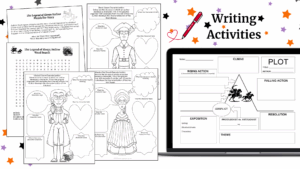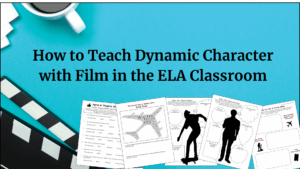
In every great story, their are characters that grow, change, and evolve. These characters are called dynamic characters. dynamic characters are the ones who undergo a meaningful, irreversible transformation, often because of challenges they’ve faced or lessons they’ve learned. For many students, understanding this shift is a critical part of building strong reading and analysis skills.
But here’s the challenge: for struggling readers and reluctant readers, tracking these changes through text alone can be overwhelming. That’s where movies can become a powerful tool for teaching dynamic character in the ELA classroom.
Why Movies Works for Teaching Dynamic Characters
Movies make change visible. Facial expressions, body language, tone of voice, and physical actions all work together to show transformation in a way that’s immediate and clear. When a student can see a character go from hesitant to confident, or selfish to selfless, they can more easily connect the dots about how and why that change happens.
A film allows you to:
Highlight the shift from static to dynamic character.
Pause and reflect on pivotal scenes that mark change.
Visually compare a character’s “before” and “after” self.
Connect character growth to bigger themes and conflicts.
Scaffolding Strategies for Teaching Dynamic Characters with Film
When I use film to teach dynamic characters, I layer in activities that help students move from simply watching to actively analyzing:
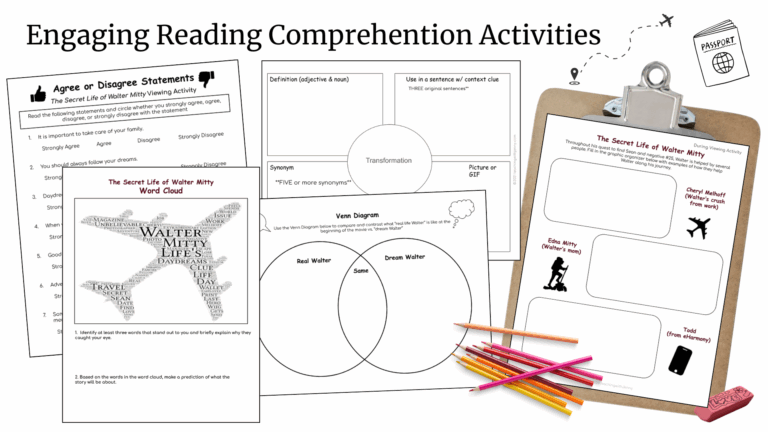
Venn Diagrams – Compare the character’s traits, thoughts, and actions at the start and end of the story.
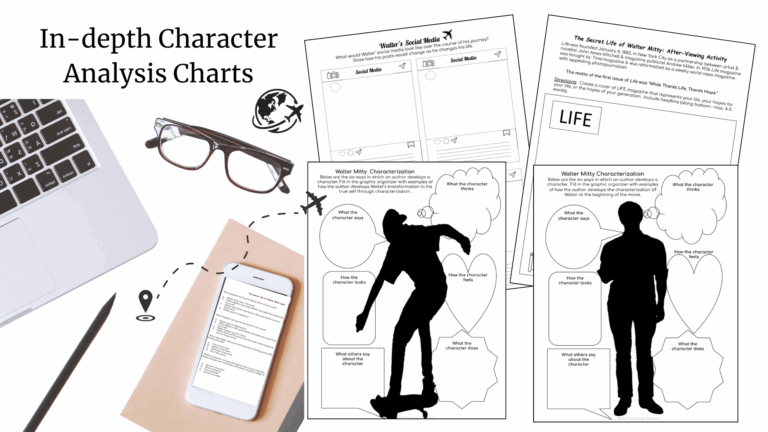
Characterization Charts – Track what the character says, how they look, how they feel, and how they behave at different points.
Helpers Along the Way – Identify the people or events that help the character change, often connecting this to the Hero’s Journey.
Theme Connections – Discuss how the character’s growth reflects a broader message in the story.
Post-Viewing Writing – Have students write a text-dependent analysis essay explaining how the character changed, why the change is irreversible, and what it reveals about them.
Choosing the Right Movie for Dynamic Character Lessons
When selecting a film, choose one where the transformation is both clear and meaningful. The best examples show a character who could easily have stayed static, but instead faces a turning point that shifts their personality, outlook, or life path.
One of the most classic examples in literature of a dynamic character is the character of Scrooge in a A Christmas Carol. If you would like to learn more about Scrooge as a dynamic character check out this blog post.
One of my personal favorites for middle and high school is The Secret Life of Walter Mitty (2013).
Teaching Dynamic Characters with The Secret Life of Walter Mitty
In this modern reimagining of James Thurber’s 1939 short story, Ben Stiller plays Walter Mitty, a man who’s put his dreams on hold to care for his family after his father’s death. Stuck in a routine at Life magazine, Walter escapes into vivid daydreams where he’s the hero—until a missing photo negative sends him on a real-life journey to face his fears, meet his hero, save his company, and see the world. With its uplifting message about courage and chasing your dreams, the film inspires middle school students to step outside their comfort zones and believe they can do extraordinary things. Walter’s transformation from timid and unsure to bold, confident, and fully engaged with life makes him an outstanding example of a dynamic character your students can clearly identify.
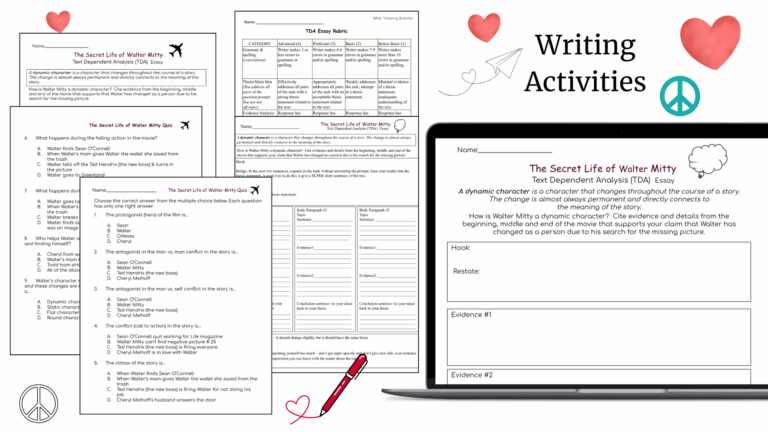
Want to See How I Teach This?
If you’re curious about how I structure my lessons around The Secret Life of Walter Mitty, I start by laying the groundwork before students ever watch the film.
We make predictions using a word cloud, discuss agree/disagree statements connected to the movie’s themes, and explore the word “transformation” with a vocabulary Frayer model.
While watching, students compare Dream Walter and Real Walter with a Venn diagram, track his traits at the beginning and end of the film with characterization charts, and identify who helps him change using a Hero’s Journey helpers organizer.
Comprehension questions along the way keep them focused on key moments.
After viewing, students dive into creative responses like designing a social media post from Walter’s perspective or creating their own Life magazine cover.
Then we transition into analysis, using graphic organizers to prepare for a dynamic character essay, which they write and assess with a clear rubric.
If you’d like to see the full set of activities and materials I use, you can find them here: [👉 Get the Secret Life of Walter Mitty ELA Movie Guide].